

 Gizem Teoman1
Abstract
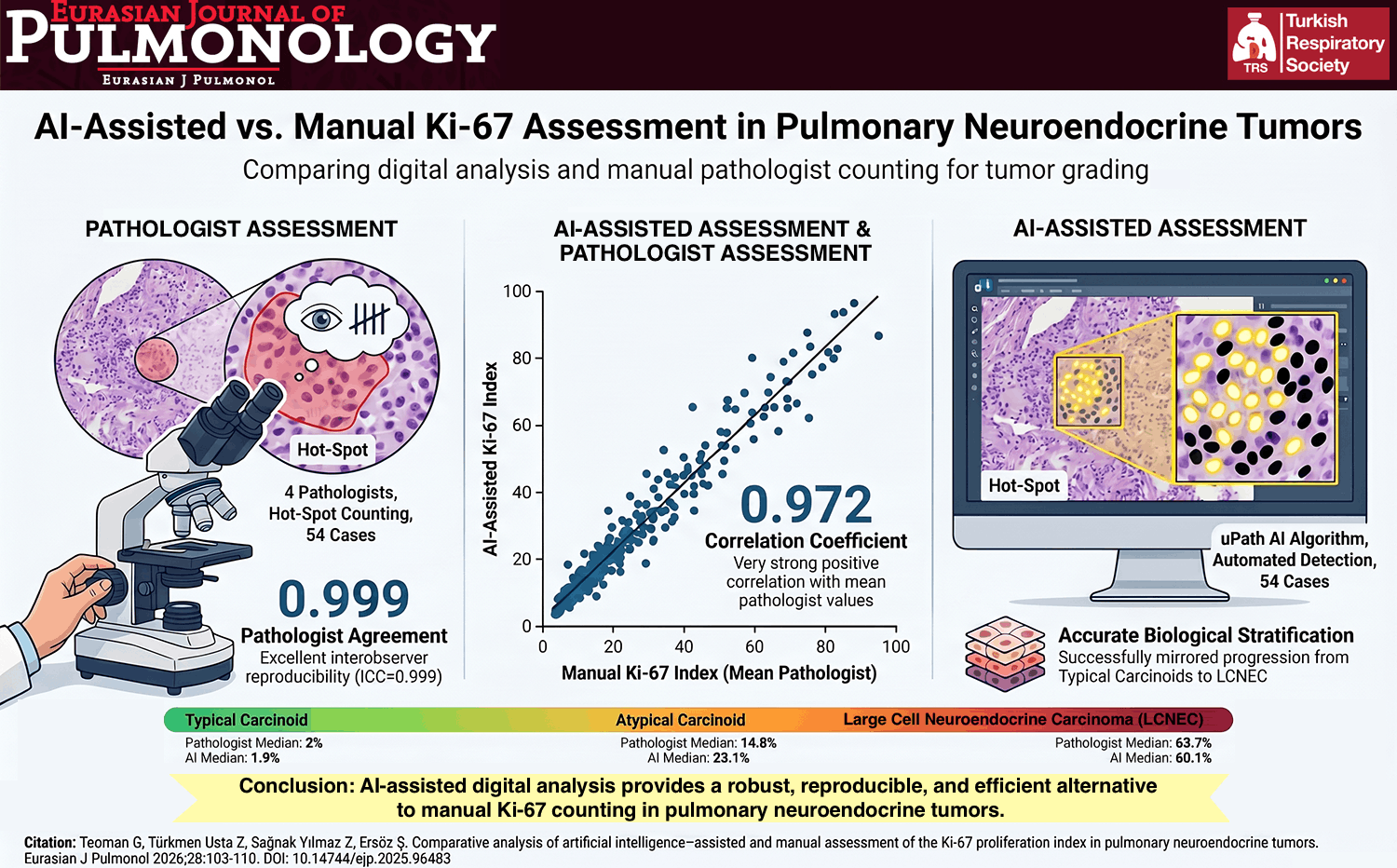
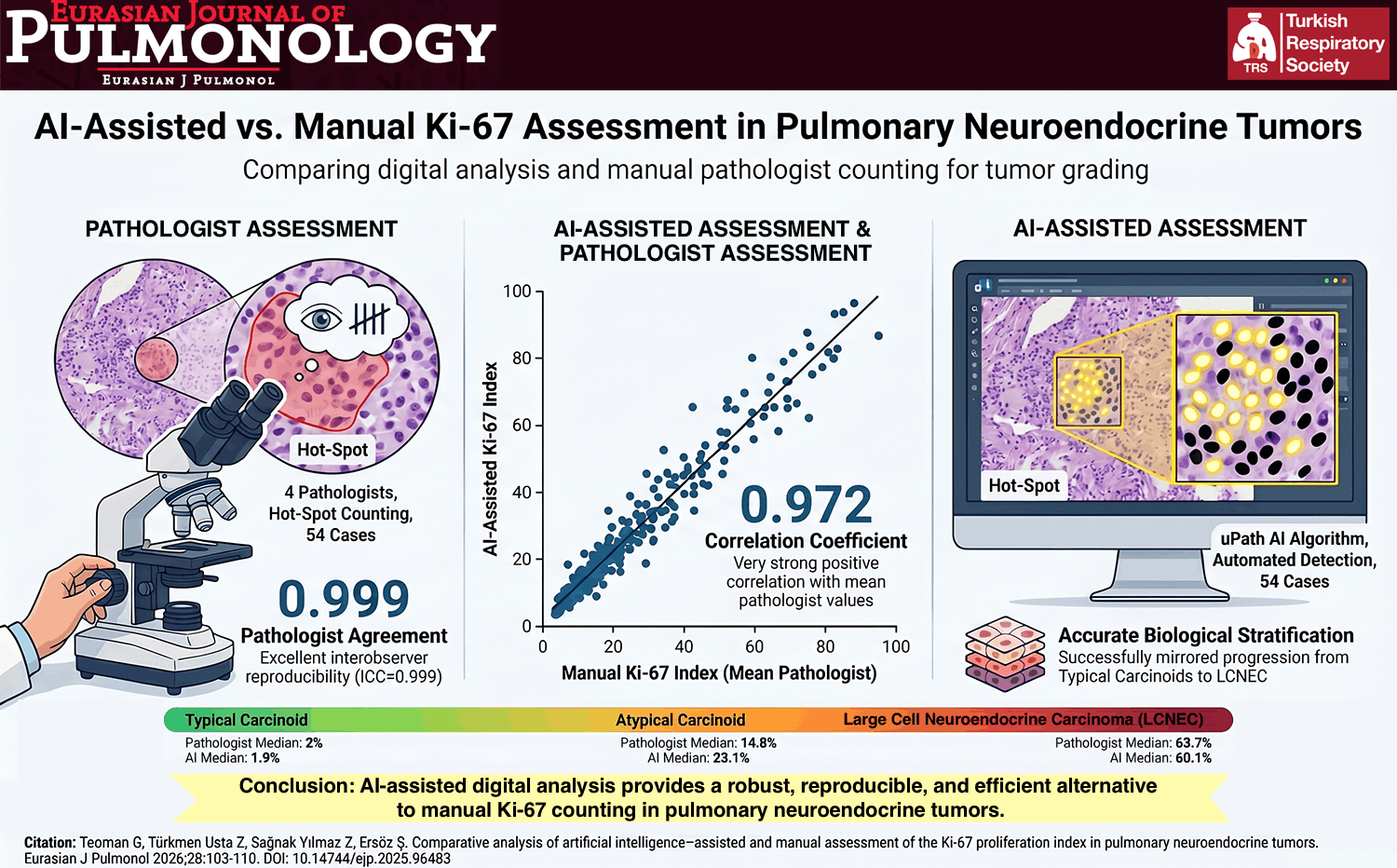
BACKGROUND AND AIM: The Ki-67 proliferation index is widely used for diagnostic classification and prognostic assessment of pulmonary neuroendocrine tumors. Manual evaluation of Ki-67 immunohisto-chemistry is subject to interobserver variability, particularly in hotspot selection and cell counting, which can affect diagnostic reliability. This study aimed to directly compare manual pathologist assessments with an artificial intelligence (AI)–based digital analysis algorithm and to evaluate the reproducibility and reliability of AI-assisted measurements.
METHODS: Fifty-four pulmonary neuroendocrine tumor cases diagnosed between 2020 and 2024 were included: 27 typical carcinoids (TC), 6 atypical carcinoids (AC), and 21 large cell neuroendocrine carcinomas (LCNEC). Ki-67–stained slides were digitized using a high-resolution scanner. Four pathologists independently evaluated hot-spot regions and manually calculated the Ki-67 index (approximately 2,000 tumor cells per hot spot), while the AI algorithm automatically identified hot spots and quantified Ki-67-positive cells (500–2000 tumor cells per case). Interobserver agreement among pathologists was assessed using the intraclass correlation coefficient (ICC), and concordance between manual and AI-based measurements was analyzed using Spearman’s correlation coefficient (r).
RESULTS: Very high agreement was observed among pathologists (ICC=0.999, 95% confidence interval: 0.998–1.000). AI-derived Ki-67 indices strongly correlated with the mean pathologist-derived values (Spearman’s r=0.972, p<0.001). Consistency was maintained across both carcinoid subtypes and large cell neuroendocrine carcinomas, demonstrating that AI provides reproducible and reliable results comparable to manual assessment.
CONCLUSIONS: AI-assisted digital analysis is a robust, reproducible, and time-efficient alternative to manual Ki-67 counting in pulmonary neuroendocrine tumors. Incorporating AI tools into routine pathology practice can reduce interobserver variability, standardize proliferation marker evaluation, and enhance diagnostic accuracy. This study highlights the potential of AI as a complementary method to manual assessment, rather than a replacement, in clinical pathology.
Graphical Abstract